A Century of Resilience
on This Corner
A Historic Catholic Church in Detroit Since 1923
This building has stood at the corner of Oakman and Rosa Parks since the 1920s. In that time it has been a Catholic parish, a community anchor, a refuge in hard times, and a witness to some of the most important chapters in Detroit’s history.
It is still all of those things.
OUR PATRON
Not many churches are named for a man who once led a gang of thieves along the Nile.
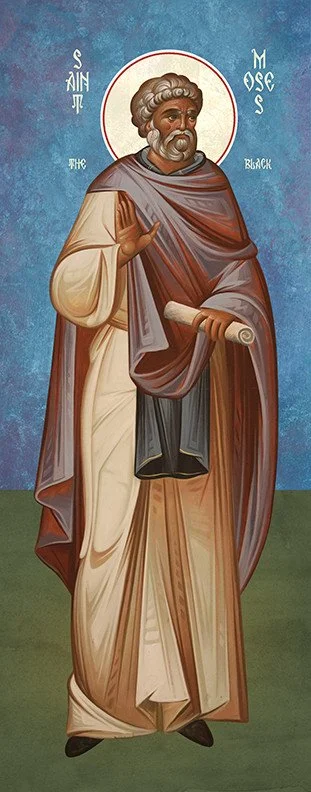
Moses was born a slave around 330 AD. As an angry young man, his master threw him out onto the streets. Huge and imposing, he became a feared gang leader who terrorized the communities around him.
One day, hiding from his enemies, St. Moses took refuge in a hermitage of desert monks. Deeply affected by their holy living and teachings, he choose to become like them, and eventually was renowned for his faith and message of peace.
Years later, several of his former gang members attacked St. Moses. He bound them, and took them to the hermitage. They were amazed at his transformation, and the bandits came to also join the community.
St. Moses is venerated in the Catholic, Orthodox, and Anglican traditions - a man whose life is a testament to what grace can do. That this parish, in this neighborhood, carries his name is not an accident.
Who Was St. Moses the Black?
St. Moses the BlackThe Church of the Madonna was built between 1924 and 1926 as an English-language parish for Detroit’s Italian immigrant community - established just before new federal policies shut down the flow of immigrants from southern and eastern Europe. Within a few years the congregation shifted, becoming the preferred parish for Detroit’s Maltese Catholics, drawn from the neighborhoods along Michigan Avenue near what is now Comerica Park.
After World War II the neighborhood changed again. As many white residents moved to the suburbs, African-American families moved in. The pastor at the time, Fr. William Cunningham, saw clearly what the moment required. In the wake of the 1967 Detroit uprising, which left 43 residents dead and a city reeling, he partnered with activist Eleanor Josaitis to found Focus: HOPE directly from this parish.
One Building, Many Communities
THE BUILDING’S HISTORY
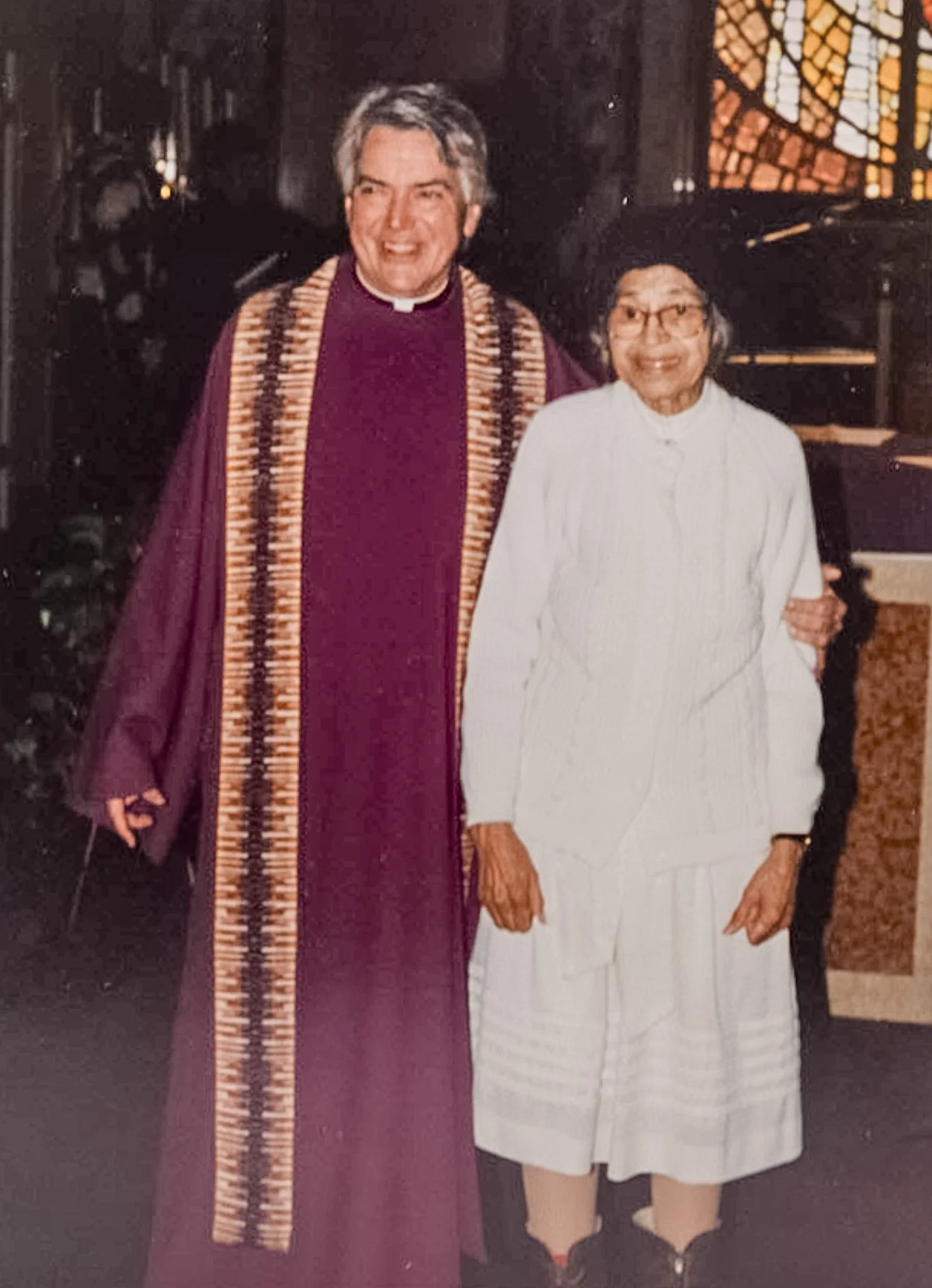
Fr. William Cunningham at Mass with Rosa ParksTheir model was concrete and practical: occupational training, starting with machinists, paired with for-profit manufacturing firms that used the space to both produce output and train workers. At its peak, Focus: HOPE had an annual budget exceeding $60 million and employed more than 700 people.
Both founders are now deceased, Fr. Cunningham in 1997, Mrs. Josaitis in 2011, but the organization continues its work on Oakman Boulevard to this day. This building has never been a monument. It has always been a tool, shaped by whoever needed it most.
After Fr. Cunningham’s death, the Church of the Madonna continued operating as an independent Detroit parish for a few years before clustering with St. Gregory the Great, St. Benedict and the Cathedral of the Blessed Sacrament. In 2013, St. Benedict, Madonna and St. Gregory the Great closed, and merged into the Madonna church building, which was renamed St. Moses the Black while remaining clustered with the Cathedral.
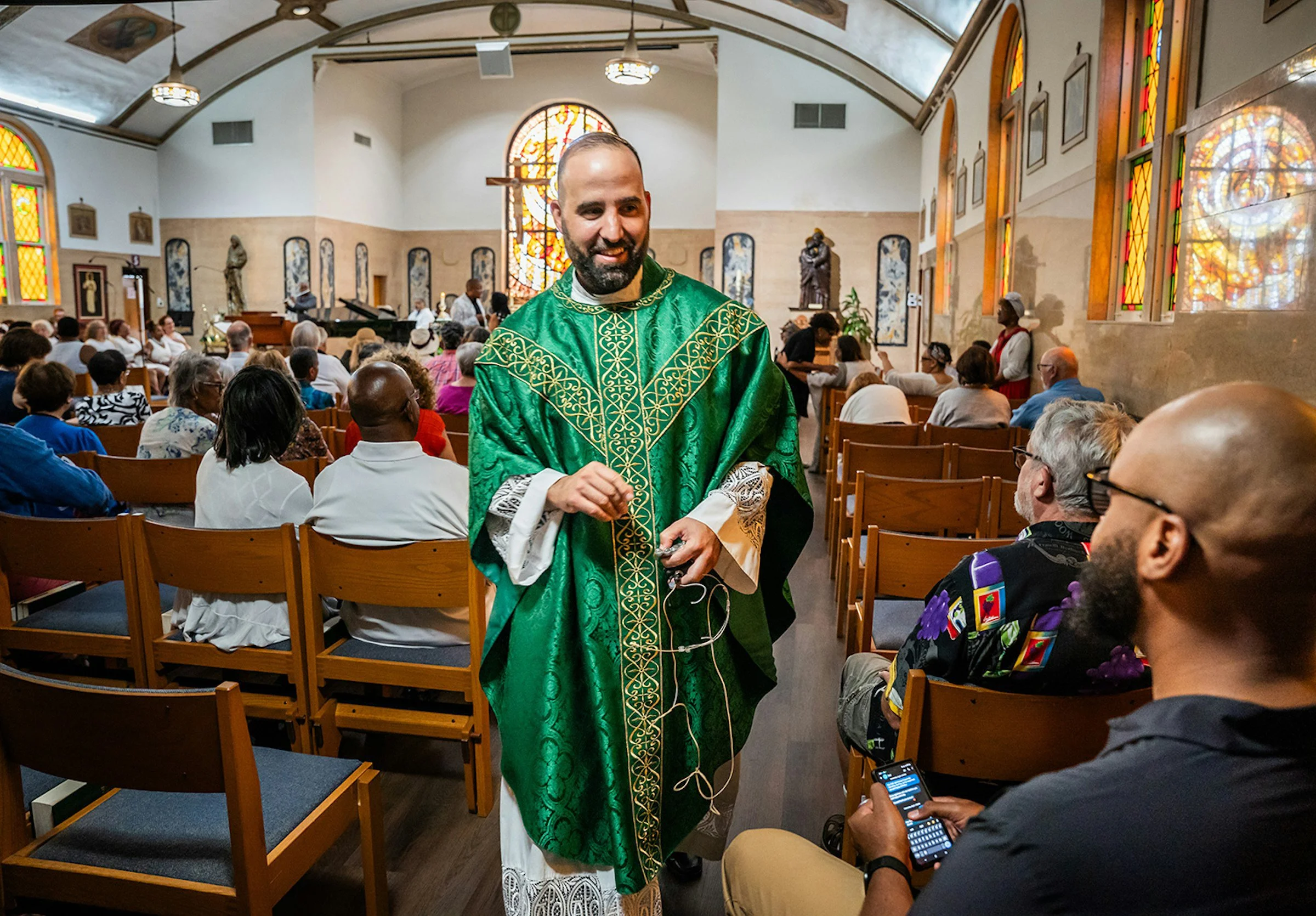
Then, in 2019, the church was de-clustered and St. Moses the Black was given its own pastor: Fr. Marko Djonovic.
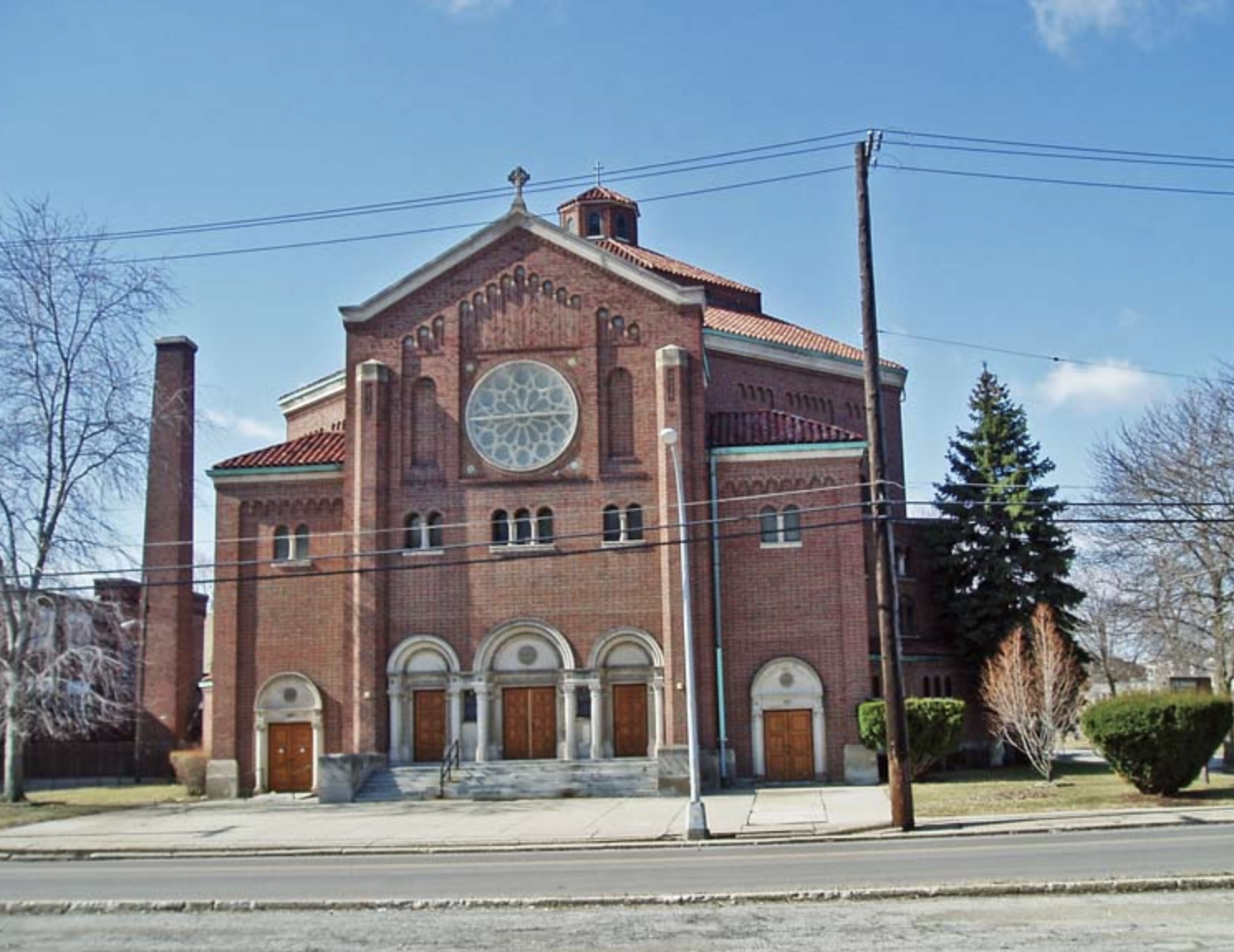
Born from Three Parishes, 2013
NEW BEGINNINGS
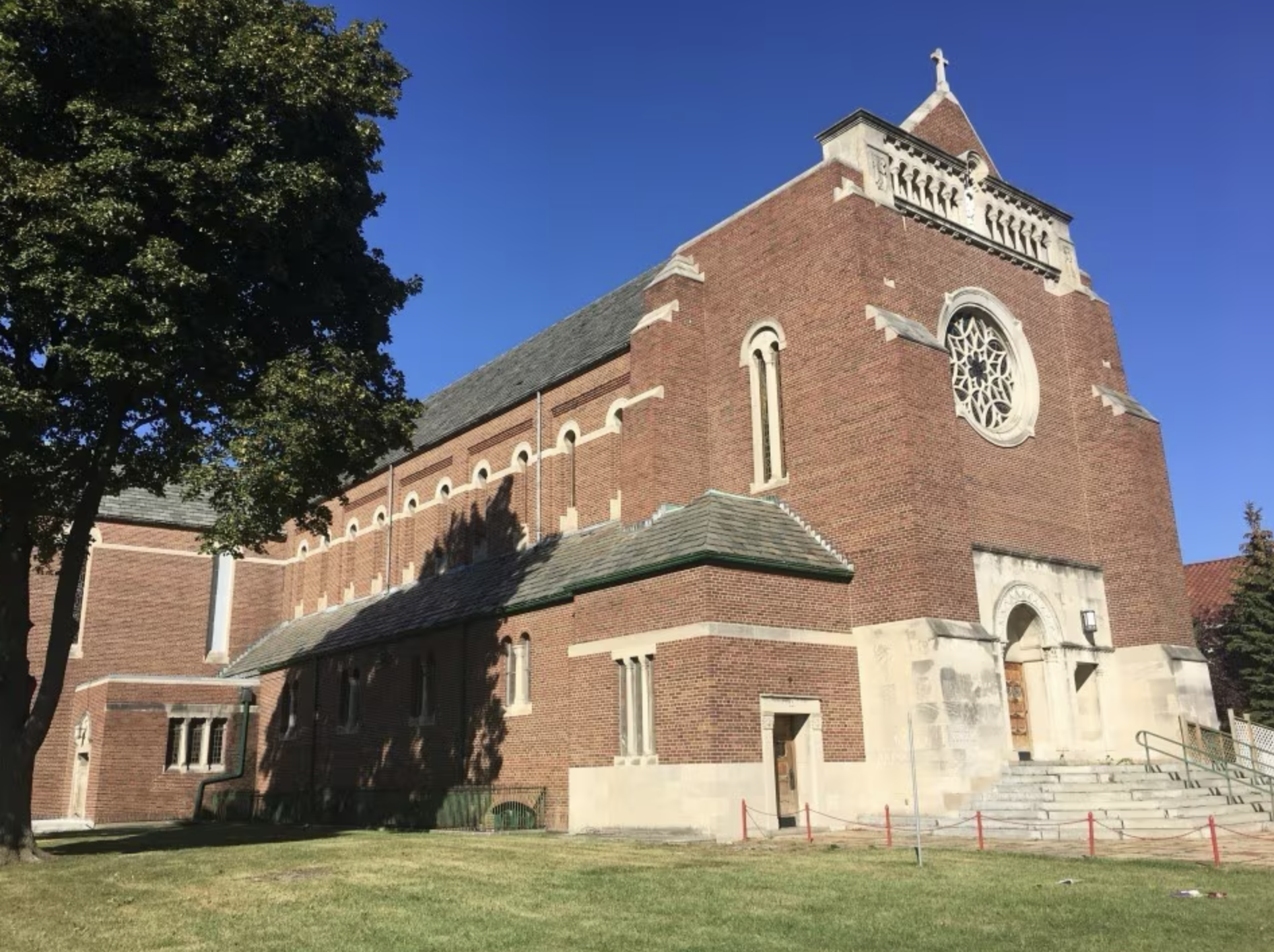
St. Benedict in Highland ParkSt. Gregory the Great in DetroitWhat followed is a story the numbers only partly tell. Old debts were repaid, critical repairs were made to the building, new members joined, and new ministries launched. The vacant lot next door was acquired and transformed into a welcoming space with new paving and lighting, bringing dignity back to the corner of Oakman and Rosa Parks.
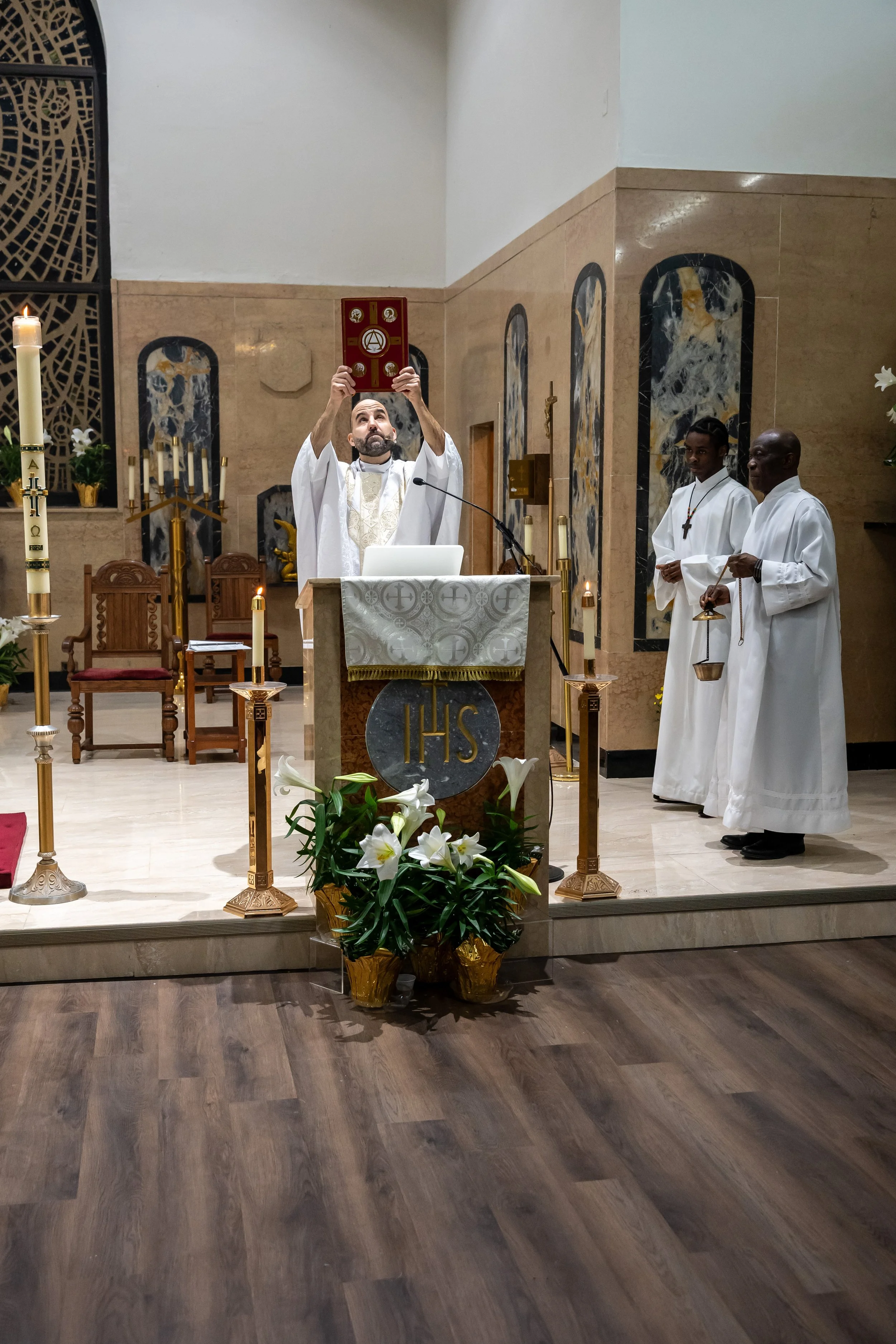
St. Moses the Black has always had a fighting spirit. It has endured neglect, financial hardship, and years of uncertainty— and it has come through each time stronger. Today it is fiscally sound, vibrant in worship, and deeply committed to the neighborhood it serves.
This is the community you’re joining when you walk through those doors.